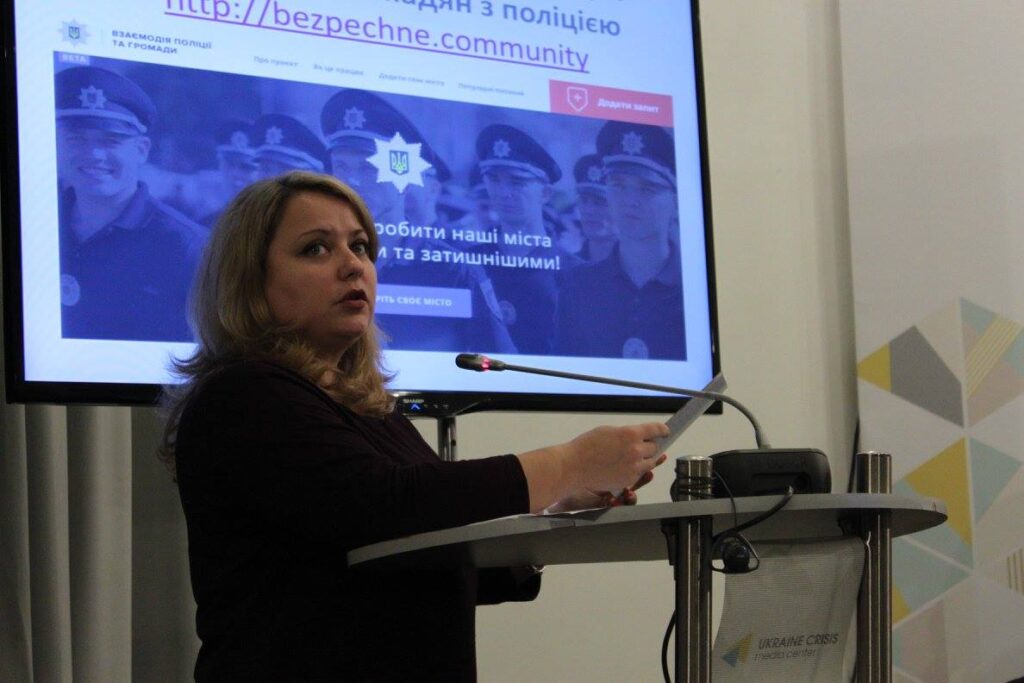


At the end of September the online community-to-police communication service marks 100 days of operation. bezpechne.communityThe platform, where Kyiv residents can report safety problems and receive recommendations from the police and authorities, was launched at the end of May 2017 by the organization DreamKyiv with the support of the International Renaissance Foundation.
Problem map
The service is built around a Google map where users can mark safety-related problems. To create a request, you enter the address where the problem is, describe it and submit it for processing. After the information is checked by the site administrator, a red marker with a question mark appears on the map. When a request receives a response, the marker turns green. This way you can not only get clarification about the situation on your street, but also see problems in other parts of the city.

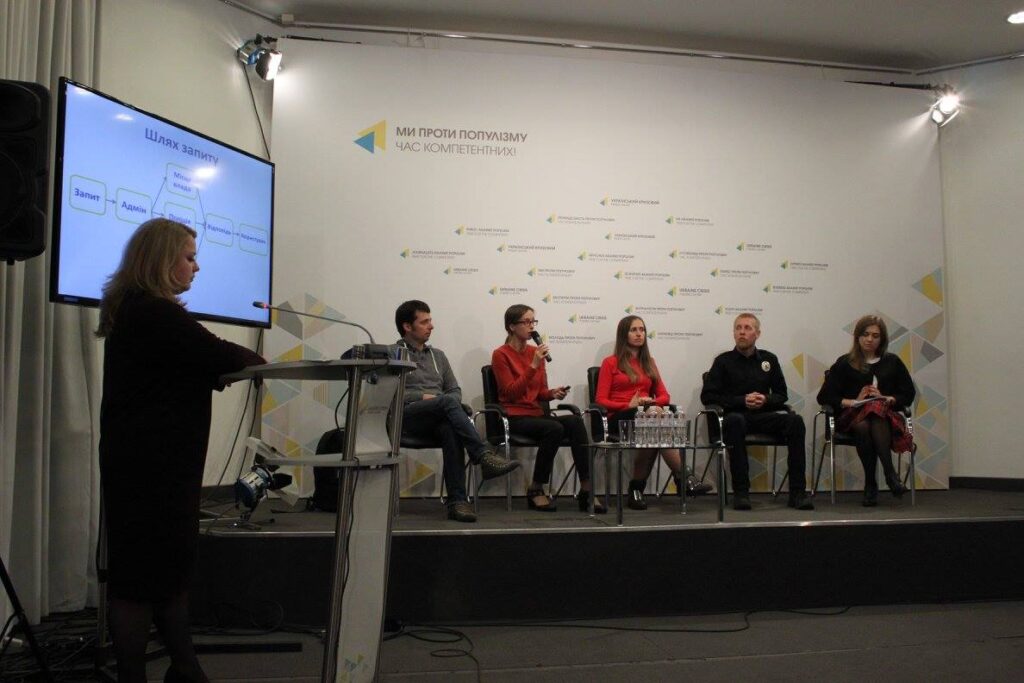
"After a person submits a request, it goes into the admin panel. The moderator reads it and decides whether to 'publish' the request on the site or not. During the entire period of operation there hasn't been a single request we did not publish. That's a positive trend," – says Anastasiia Bahniy, project coordinator at DreamKyiv and moderator of the service.
Most often the site receives complaints about informal street trading, traffic violations, road problems (asphalt quality, road markings, missing signs), illegal drug activity (drug dens in building entrances and advertising of groups on Telegram), the behavior of owners of large dogs, breaches of public order (noisy groups under windows at night), and requests to adjust police patrol routes.
DreamKyiv has established cooperation with the Kyiv City Administration contact service 1551, the city's Patrol Police, as well as with legal clinic specialists from the National Academy of the Ministry of Internal Affairs and the Centers for Free Legal Aid. Lawyers provide guidance on how to resolve the problems raised in requests.
"When a request reaches the site, the administrator contacts the competent authorities so they can provide a response. When the response arrives, it is uploaded to the request's profile – then it can be seen both by the person who submitted it and by all other users of the service", — Anastasiia Bahniy explains.

"The service should relieve the police of a large number of pointless questions that are not within their competence at all", — says Yevhen Mamushkin, senior inspector for special assignments in the Public Relations Department of the Patrol Police.
Recently, request profiles gained the ability to rate answers and comment on them. Thanks to this, the project team will know whether the advice was helpful.
Legal education
In most cases users are advised to send official requests to municipal services. Anastasiia Bahniy explains: the service is intended not to solve problems, but to encourage citizens to be active.
"On one hand, it responds to requests from individual people: providing clear answers, recommendations and explanations. On the other hand, it highlights broader urban problems that the police, local authorities and the community must work together to address. So one of our tasks is to initiate such a three-way dialogue", — she says.
The service moderator emphasizes: city residents need to learn to solve security-related problems on their own, without waiting for authorities or the police to do it.
"We still have a patriarchal attitude toward authorities. But the police cannot solve problems without the community's help. Citizens must be active", — emphasizes Yevhen Mamushkin.
Analysis of requests shows that people often do not understand that the police are not responsible for issues like road markings or installing video cameras. So one of the main tasks of the service is to help Kyiv residents figure out what to do and whom to contact to resolve a given problem.
A new service — the 'Electronic District Officer's Cabinet' — is also planned for the site. Through it users will be able to find the contact details of their district police inspector and send them a private message.
Sharing experience
"Anyone willing to take responsibility for its maintenance can 'connect' their city to the service," says Anastasia Bahniy.
"Right now we already have almost official agreements with three cities – — Ternopil, Poltava and Mykolaiv. In Ternopil the city authorities initiated the launch, in Poltava it was the patrol police, and from Mykolaiv we received four letters from four different people," she adds.
Letters also came from Mariupol, Kherson and Zaporizhzhia. The service moderator explains that the person who initiates the project's launch in their city must ensure ongoing administration of the platform. In turn, the DreamKyiv team is ready to train new people to use the resource, organize a media launch and establish cooperation with partners.
Source: Center for Human Rights Information website