


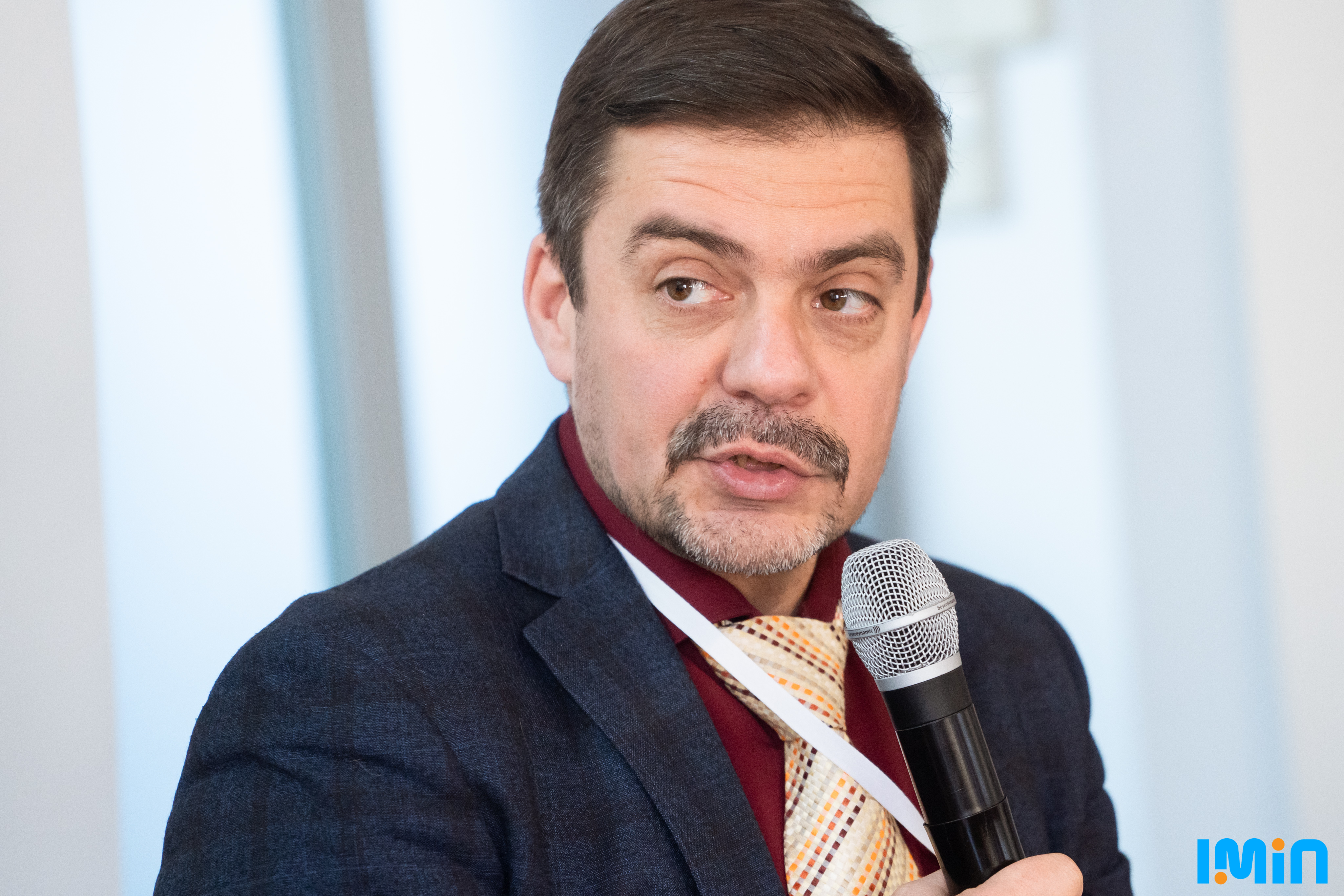
Roman Koval,
trainer, mediator,
Chair of the Board, NGO "Institute of Peace and Understanding"
What could be common between security and dialogue? In fact, there is a direct link between them, but for many people it is far from obvious. This is unfortunate, since both citizens and local authorities often, because of this lack of understanding, lose the most effective and least costly tool for building safety in the community.
To understand this, it is necessary to take a closer look at the concepts of "security" and "dialogue".
At first glance, "security" – is simply the absence of "danger." This is how we most often think about security, and it's true, but the problem is that we don't quite correctly understand the meaning of the word "danger." As a rule, the first thing that comes to mind is that danger means a high level of crime and the threat of violence. Unfortunately, representatives of the authorities also tend to think that security is exclusively the responsibility of law enforcement agencies.
However, if you examine this issue more deeply, it becomes clear that "danger" — it's much more than that.
For example, an unlit park may be entirely safe and pose no threat to anyone, but when returning home late at night a lone woman may still feel extremely unsafe in it because she doesn't know, that she has nothing to fear. Likewise, a sick person will feel unsafe if she is not sure, when exactly an ambulance will arrive and whether the doctor will be sufficiently qualified to provide the necessary care. Residents of a community who do not know, how environmentally friendly a new production facility being built on their land will be, will also feel threatened. A young person finishing studies at a vocational school (PTU) and is not sure, whether she will be able to find a job in her hometown, will also feel unsafe, since she does not know how she will make a living and feed her family. Likewise, it will be dangerous for parents if their child must go to school along a road that lacks sidewalks and pedestrian crossings, and the road surface is so poor that drivers must drive around potholes on the shoulder, and no one can say how long this condition will last and when, finally, the road will be repaired.
There is much in common among all these examples — it turns out we feel unsafe when we do not have sufficient or necessary information and do not understand what is happening and why. Psychologists know this well — we fear what we do not understand or know. That is the source of our fears, and fear creates a sense of danger. Only communication gives us the opportunity to obtain important information from one another and to clarify our concerns, misconceptions, or prejudices. This is true both within families and in the relationships between local authorities and community residents.
You may already have guessed what dialogue has to do with this, but I'll add a little more.
Many people think that dialogue — is, unlike a monologue, a conversation between two or more people. But originally the word meant not simply a conversation, but a process of knowing through understanding (Διά – "for"; λογος – "mind", "meaning", "understanding"). Today the importance of dialogue in civilized countries is evidenced by the fact that the need for community dialogue is enshrined in law, and dialogue skills are taught not only to philosophers and diplomats but also to managers, politicians, teachers, doctors, waitstaff — in short, to professionals of any field who work with people. How well you manage to reach mutual understanding with a client, colleague, partner, subordinate, voters, or a potential investor will determine whether they view you and your relationship as reliable, whether they can trust you, and how safe it is to deal with you.
Dialogue in the community — is not just the mayor or village head talking with community residents, although that can be a dialogue if both sides hear one another. Rather, it is a prepared and structured process that involves everyone connected to the topic or issues that need community discussion and understanding. Such a dialogue typically has a neutral, independent facilitator (often called a facilitator, from Lat. faciliae – "to make easier") who guides the discussion so everyone hears and understands each other and follows an agenda to achieve the meeting’s shared goal. For this reason these processes are often called "facilitated dialogue." The purpose of dialogue can be to reach a joint decision or resolve a conflict, as well as to improve understanding and/or relationships among participants.
When the well-known facilitation practitioner Michael Wilkinson was asked, "Why involve many people if a qualified specialist can find a better solution than a group of non-experts?", he replied: "First, for complex problems and tasks you can never find a single expert who possesses all the necessary knowledge. So the first task of a facilitator is to elicit and integrate the required knowledge from different heads. Second, plans and decisions most often fail to be implemented not because they are bad, but because the people responsible for implementing them were not properly involved in developing those decisions. Therefore properly involving people in the decision-making process is the facilitator’s second task!"
In addition, a professional facilitator leading a dialogue can do many other useful and sometimes even “surprising” things. Besides analysing the situation that needs resolving, or the conflict, they will always speak with key people who should be involved in the dialogue process to clarify their perspectives and needs related to the agenda and to prepare them for participation in the joint meeting. Sometimes a single such meeting is enough for the emotional intensity of heated, “fiery” disputes to shift to a measured and constructive discussion. Representatives of the Pokrovsk City Executive Committee told us about exactly such changes following the dialogue on inclusive education in their city.
When community residents are involved in dialogue and decision-making on issues that threaten their safety, the mere fact of participating in the dialogue relieves a great deal of anxiety and worry, because people become informed about what is being done in the community and feel part of making important decisions about their safety. This also eases subsequent implementation of those decisions, especially when they require residents’ support and cooperation. Dialogue is an ideal tool for harnessing human potential for local initiatives to strengthen community safety.
Certainly, simply speaking to participants individually is not enough for a successful dialogue. After studying the situation, an experienced facilitator develops a plan for the dialogue, which may consist of a single meeting or, depending on the complexity of the issues, several sessions. They set the agenda to help participants understand the essence of the problem they are trying to solve, or the causes of the conflict that divided the community, and to engage everyone in the process so all can express their views and listen to and understand one another.
The latter is actually not so simple. If you recall any dispute, attempts by the parties to convince one another of being right usually end with some participants not hearing others and remembering the next day only that they were right and the others were wrong. Sometimes two people argue hoarsely while both are saying the same thing, just in different ways… This happens naturally, and our physiology is to blame: once we decide we are “in conflict” with someone, our hormonal system kicks in and blocks our perception so we do not hear or understand our opponent’s arguments.
When there is a moderator or facilitator, they repeat what participants say, and participants finally begin to hear each other's arguments because a neutral person articulates them, understands each participant, and fosters mutual understanding.
IMiP's experience includes many examples where bringing in a facilitator to conduct a dialogue helped resolve problems that sometimes lasted for years and poisoned the community's psychological climate. These range from roof repairs and public order issues to reaching understanding on decommunization and historical monuments. Dialogue has also proven an extremely important approach in helping resolve complex issues faced by internally displaced persons and the reintegration of former servicemen returning home after demobilization from the Armed Forces of Ukraine, often with psychological trauma and sometimes with physical injuries.
The only time dialogue is definitely unnecessary is when a decision has already been made and the Head wants to hold a “dialogue” to convince others that that decision is correct. In such a situation a genuine dialogue is unlikely to occur, and few specialists will agree to lead the process. Attempts to use dialogue to manipulate public opinion typically endanger the organizers. Dialogue is voluntary—you cannot force people into it; you can only interest them. From our experience, safety issues are ones that almost everyone cares about and wants to help resolve in their community. That opportunity creates a sense of involvement not only in building a safe environment but also in strengthening relations among dialogue participants. People who become like-minded and do good work together always feel calm and confident in their hometown.
To sum up what has been said, it can be noted that without the practice dialogue it is very difficult to expect genuine safety and trust in the community. You can learn more about dialogue from the following sources:
Dialogue Standards: Definitions and Principles, IMiP
Page Resources of the Institute of Peace and Understanding
Vaidotas Verba, ambassador, OSCE project coordinator in Ukraine, publication Why professional help is needed to build a productive dialogue
Olena Kopina, Olha Miroshnyk, Oleksii Serdiuk, Police–community dialogue as a social technology for implementing the principles of community policing in a local community
Online educational course How to effectively plan and facilitate a dialogue
