


One third of Ukraine’s population lives in rural areas. However, the police are concentrated in cities and district centers. Villages are assigned district officers, but each of them covers up to 10–15 settlements, with distances between them of up to fifty kilometers. So it is difficult to speak of effective preventive policing, which leads to a worsening criminal situation in villages. Nonetheless, there are communities with no serious crimes and only a few offenses that can be counted on the fingers — although the police also visit those places very rarely.
Project Sheriffs for New Communities is a study of how rural “sheriffs” operate — in other words, how community residents independently resolve legal problems and care for shared safety. During 2018 and 2019 the project team from the Charitable Organization “Mercy and Health Foundation” and the Public Organization “Information Resource Center ‘Legal Space’” collected information on the work of sheriffs in small communities in Kherson, Poltava and Kharkiv oblasts.
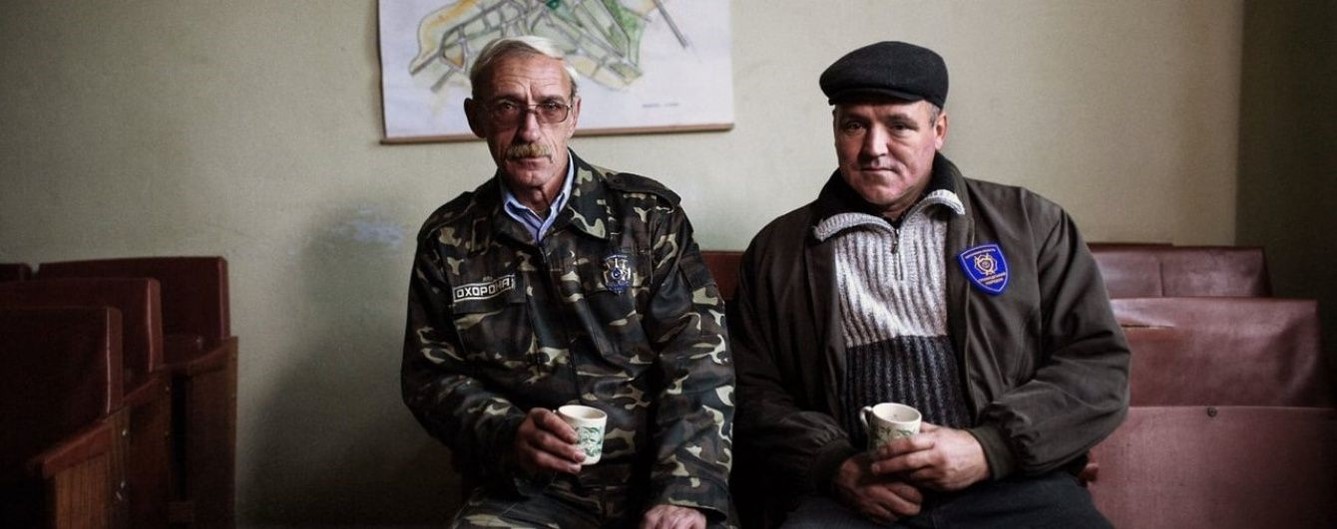 Sheriffs of Stara Zburiyivka – Viktor Kryvoborodko and Volodymyr Rudkovskyi
Who the sheriffs are
Sheriffs is not an official term. It is a general name for local residents, civilians who oversee law and order in their settlement. They work on preventing offenses, have the right to draw up certain administrative reports, receive a salary from the local budget and report to the community. Police often turn to them for help, asking them to go to a location and sort out what happened. There is no single state model. Almost every community has its own know‑how, but some forms of organization are very similar.
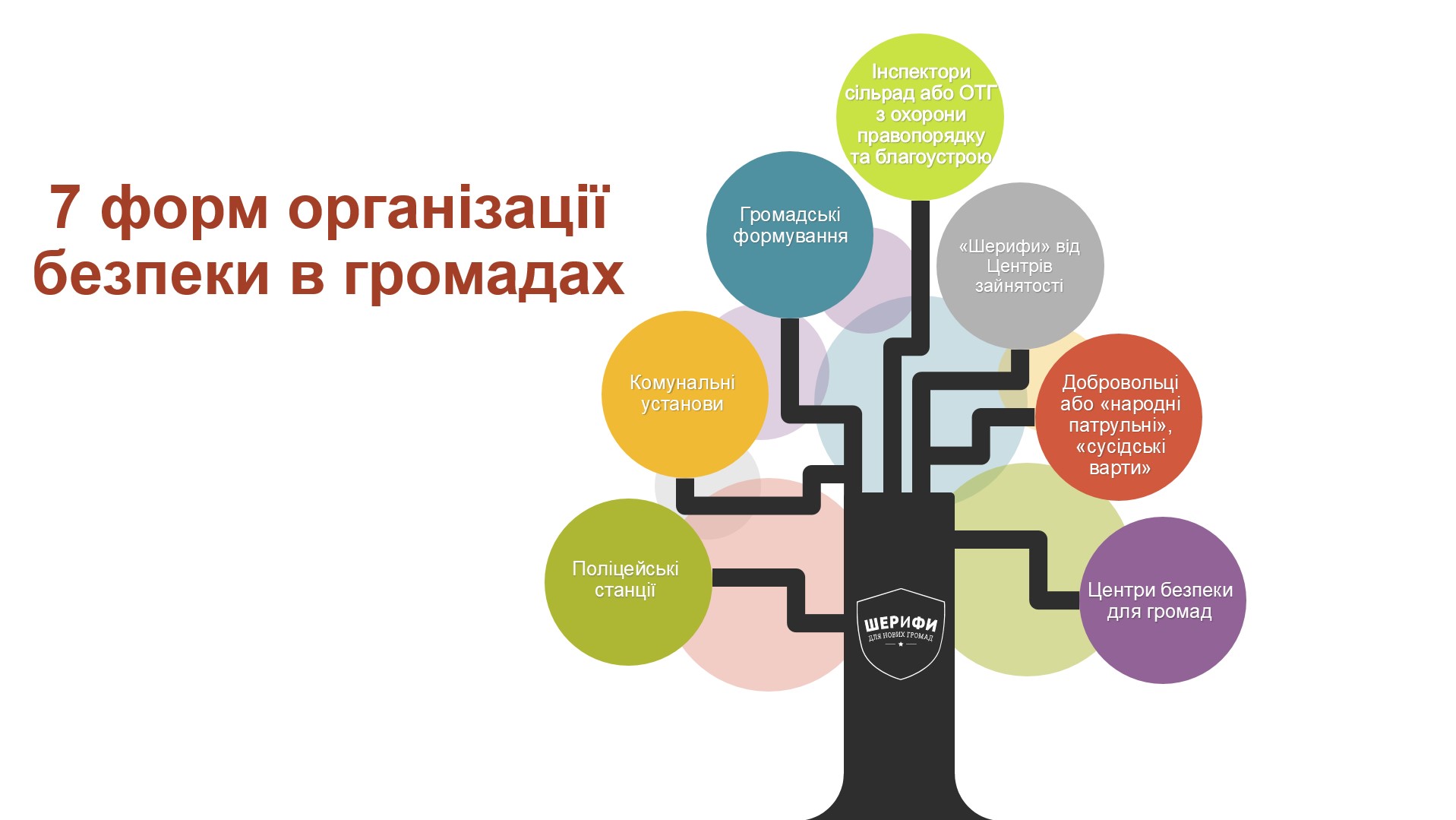 Tree of organizational forms
Specifically, the study identified 7 forms for ensuring safety in communities:
- Inspectors of village councils or hromadas for law and order and community maintenance;
- Community formations;
- Public information inspectors on law and order from Employment Centers under the 'Sheriff' program;
- Municipal institutions;
- Volunteers, or 'people's patrols';
- Police stations;
- Community safety center.
Organizational forms of safety
Village council or OTG inspectors for law and order and community upkeep
Muzykivska OTG, Kherson Oblast
Muzykivka's 'sheriff' is a former district police officer who oversaw the village and was respected. As soon as he retired, the village head invited him to serve as the village council's inspector for law and order. When the OTG was formed, his position was also confirmed. But before hiring such an employee, the community had to develop and adopt an OTG safety and improvement program, as well as the inspector's instructions and job duties. They had to do this from scratch, since there were no examples or templates of such documents in Ukraine yet.
Now the community has 'two and a half' sheriffs: amenities inspector Yevdokiya Amelkina, safety inspector in Muzykivka Serhiy Shabelnikov, and a part-time safety inspector in the village of Skhidne, Pavlo Bazovko.
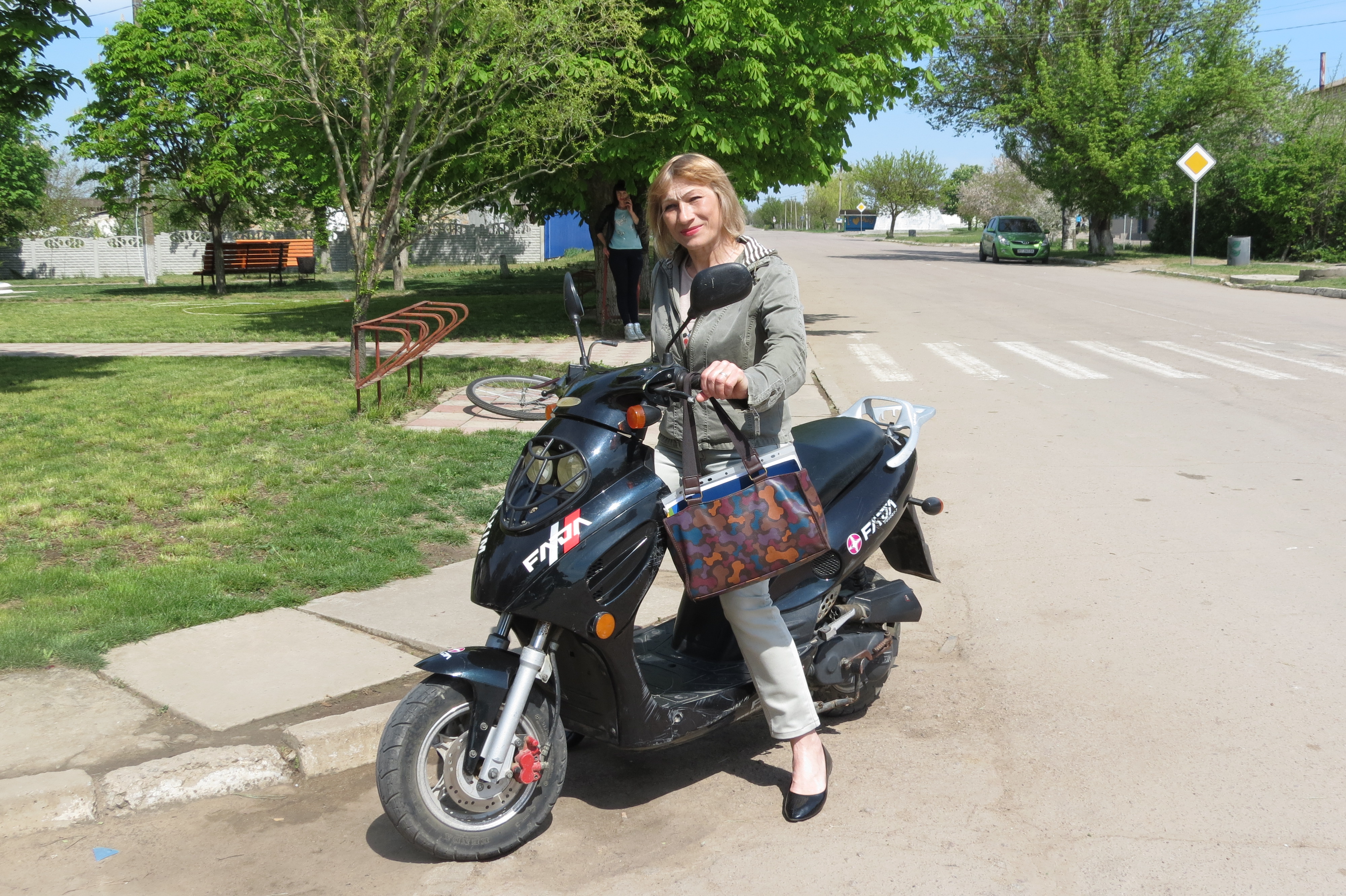 Yevdokiya Vasylivna Amelkina
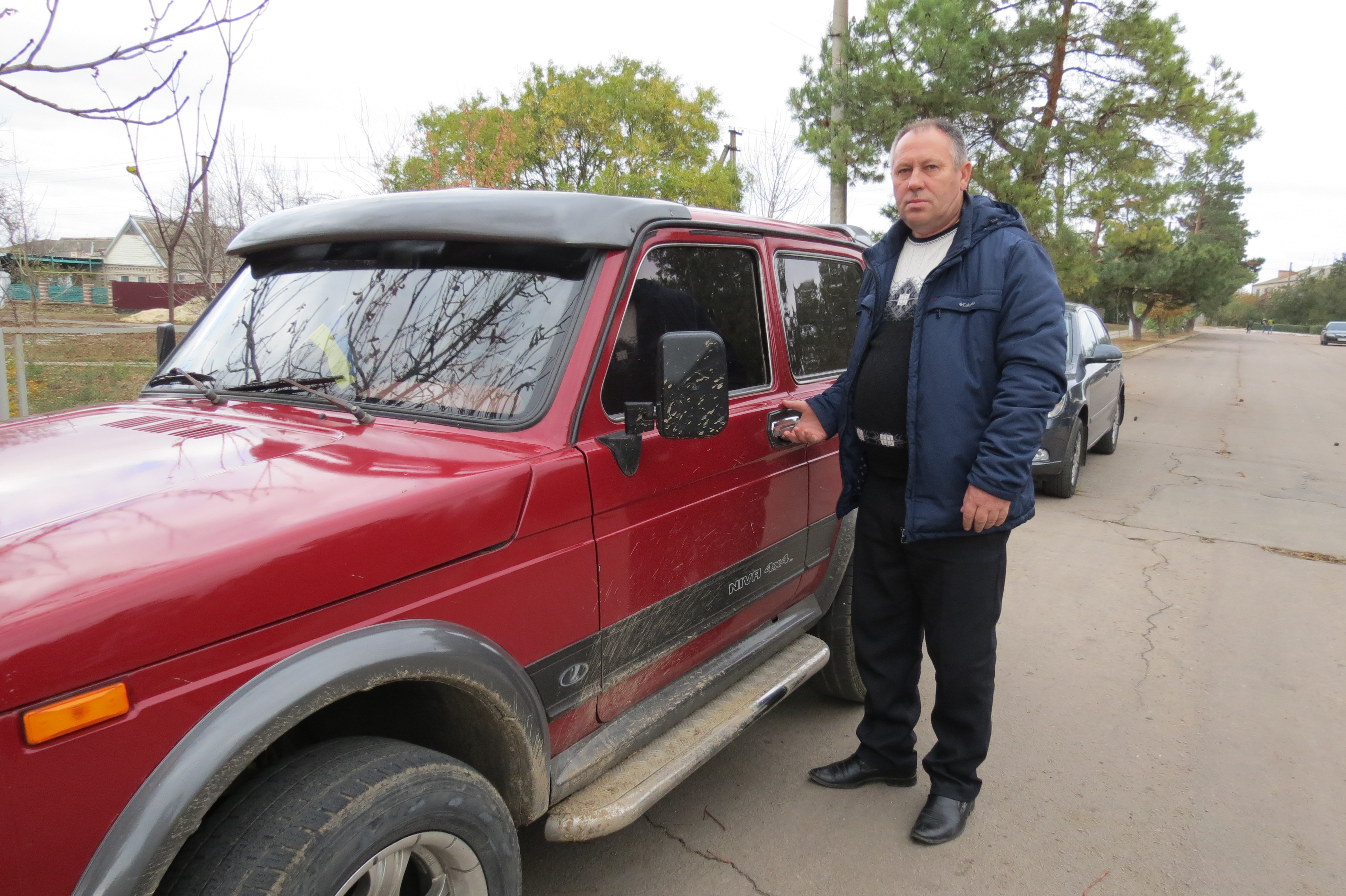 Serhiy Hryhorovych Shabelnikov
Community formations
Chulakivska OTG, Kherson Oblast
In the Chulakivska community there is a public formation — a branch of the Ukrainian Registered Cossacks. The OTG inspector for law and order is Mykola Korobka, a former agronomist, a seventy-year-old retiree and the head of the public formation.
Members of the formation patrol the villages, catch poachers, visit disadvantaged families, and carry out educational work with children and teenagers. Offenses occur mainly in summer, when hired workers from other settlements come to work for farmers. According to the district officer, Mykola Korobka resolves 80% of offenses before the police arrive.
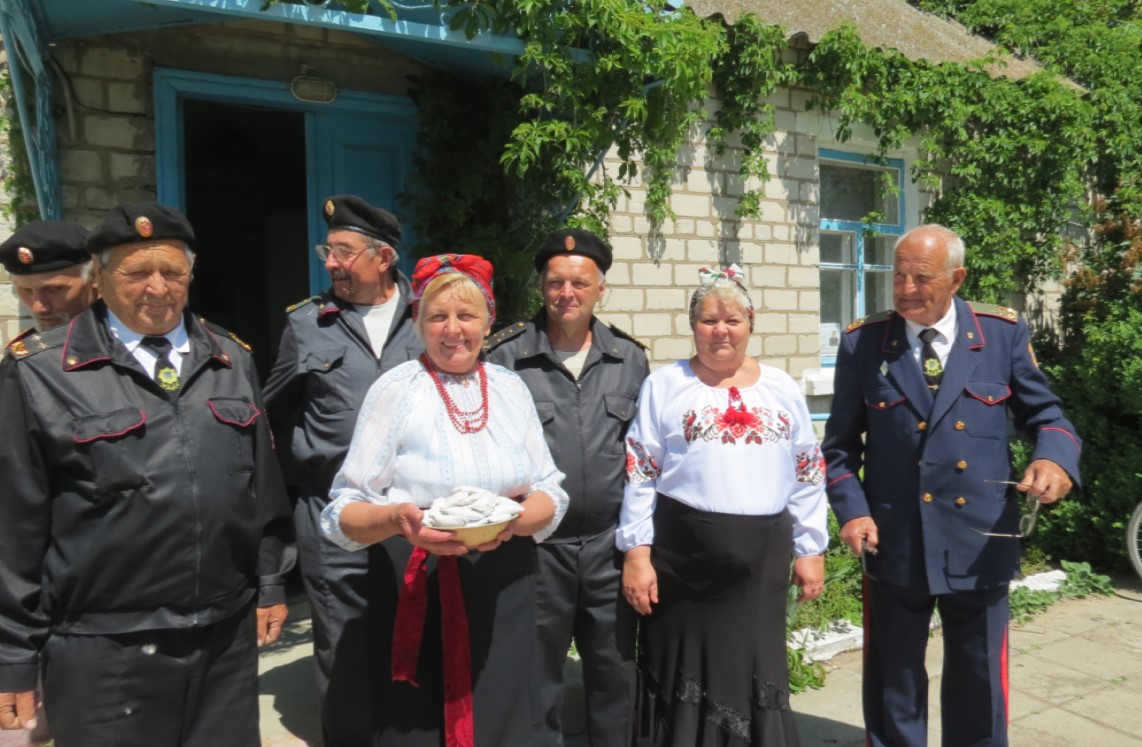 Chulaky residents, together with Mykola Korobko (pictured on the right), invite visitors to the Cossack parlor at the public order support post
Instructors from Employment Centers informing the public about preventing public-order violations under the "Sheriff" program
In 2011 the Kherson Regional Employment Center launched the unique "Sheriffs" project. It is a distinct form of community work that invites unemployed local residents to help maintain public order in their village or town. The project is implemented through close cooperation between employment centers, local self-government authorities, law enforcement, and the public.
District officers collect and provide information about communities' needs for public-order instructors. Employment center staff then select candidates from among unemployed local residents. Employment center psychologists assess candidates' professional suitability—how responsible, communicative and restrained they are, and whether they can find common ground and earn trust. The candidate is then approved by local leadership, and police representatives brief the "sheriffs": introduce them to the law, explain how to act in various situations, how to protect themselves, how to make a remark or calm people, and so on.
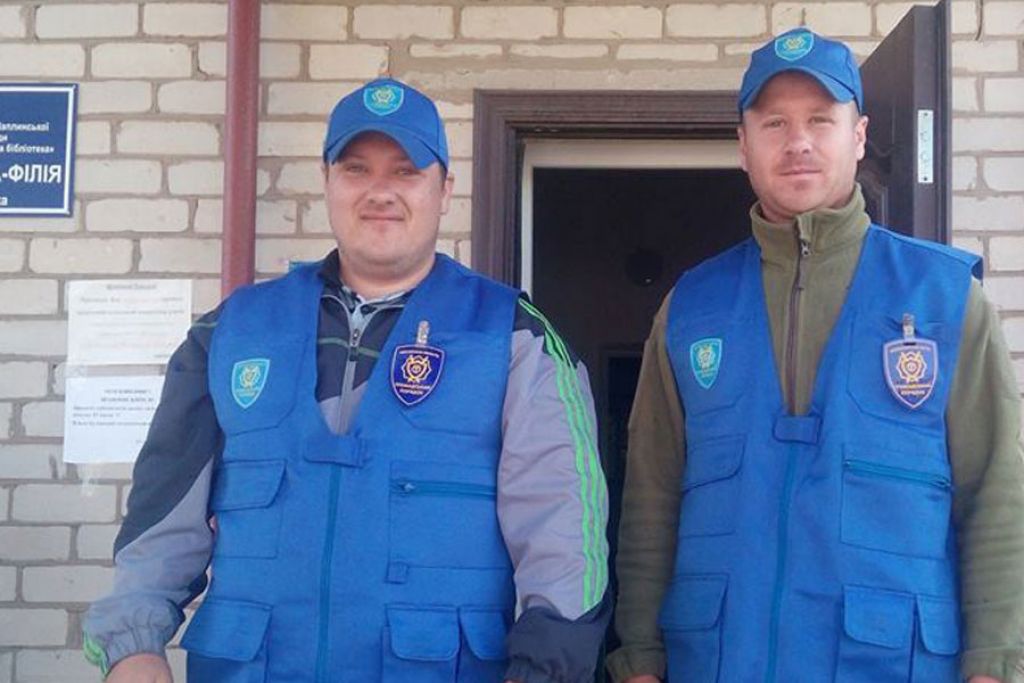 Employment center specialists developed a uniform for "Sheriff" project participants in 2011 that is still used today: a blue baseball cap with the service logo and a vest with "Public Order" written on the back. Photo from the employment center archives
Municipal institutions
Petrivsko-Romenska hromada, Poltava Oblast
In Hadyach district a security department was created within the district council's municipal enterprise "Service." Department employees guard municipal facilities and patrol the territory of the four village councils that are part of the Petrivsko-Romenska hromada. The municipal enterprise's security department is subordinate to, accountable to, and supervised by the local self-government authority, and is funded from the local budget.
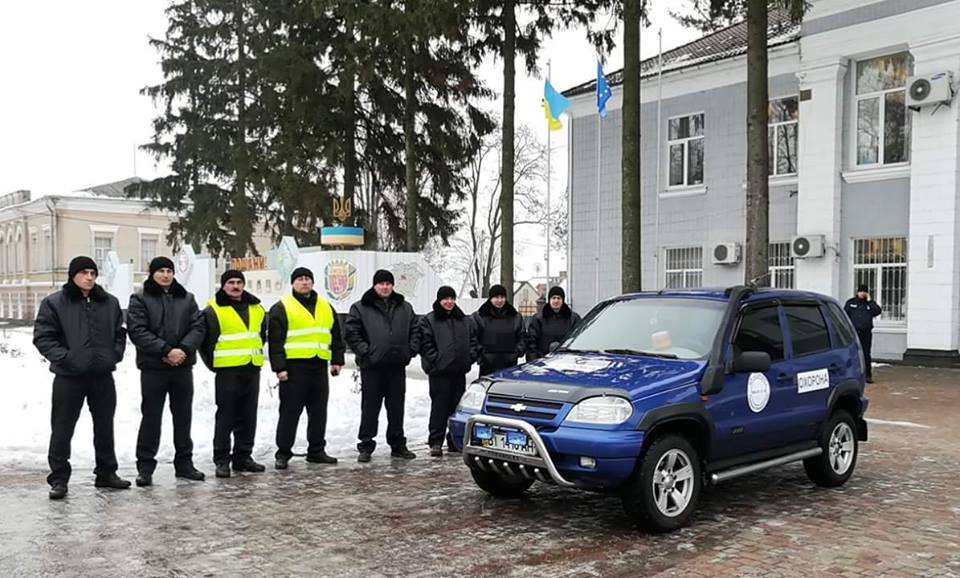 Employees of the security department of the municipal enterprise "Service"
Volunteers or "people's patrols"
Luchky village, Poltava Oblast
The village of Luchky is mostly home to pensioners who, during 2015, suffered from thieves stealing cows at night. They decided to guard the village entrance themselves. Sixty-five men and thirteen women patrolled in groups of three from eleven at night until five in the morning. They first walked around the village, then went to the only entrance and waited for outsiders. Some volunteer patrols stopped cars and asked unfamiliar drivers where they were going. If drivers refused to answer, the patrols escorted their vehicles through the village until they learned the strangers’ destination. They also recorded license plates. Other patrol members said stopping cars was illegal, so they simply followed strangers on bicycles or in their own cars. The thefts stopped.
In 2018 Luchky installed video cameras, after which night patrols were discontinued. The residents who had patrolled at night for three years finally get to rest.
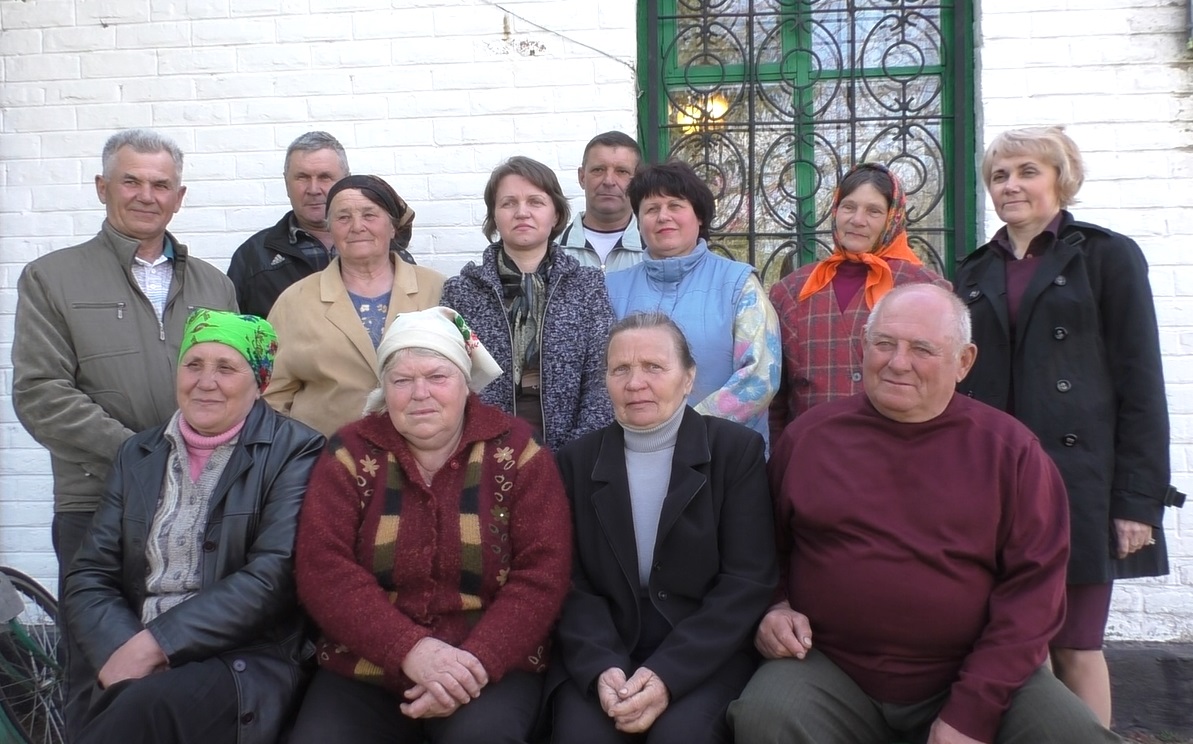 Luchky residents patrolled at night for three years.
Police stations
Zelenopidska United Territorial Community, Kherson Oblast
The first permanent police station in southern Ukraine began operating in April 2018 in the Zelenopidska United Territorial Community of Kakhovka district. Until then, similar facilities in Kherson Oblast had been temporary and operated along the seashores during the resort season.
Police stations are service premises provided to the district police officer to carry out duties for maintaining law and order in remote settlements. They also include space for a rapid response unit, juvenile prevention, a local inspector for public order, and a room for meetings and joint conferences.
The police station premises are equipped with the necessary technology, giving staff access to the internet and the databases that are part of the Ministry of Internal Affairs’ unified information system.
 Police station in the Zelenopidska United Territorial Community of Kakhovka district
Community safety centers
Butenkivska United Territorial Community, Poltava Oblast
In Poltava Oblast, in the Butenkivska community of Kobeliaky district, authorities addressed safety in a broad sense—not only protection from thieves and offenders—and opened community safety centers. The centers simultaneously house the rescue service, medical assistance and a police officer’s office, all coordinated by a single dispatch service.
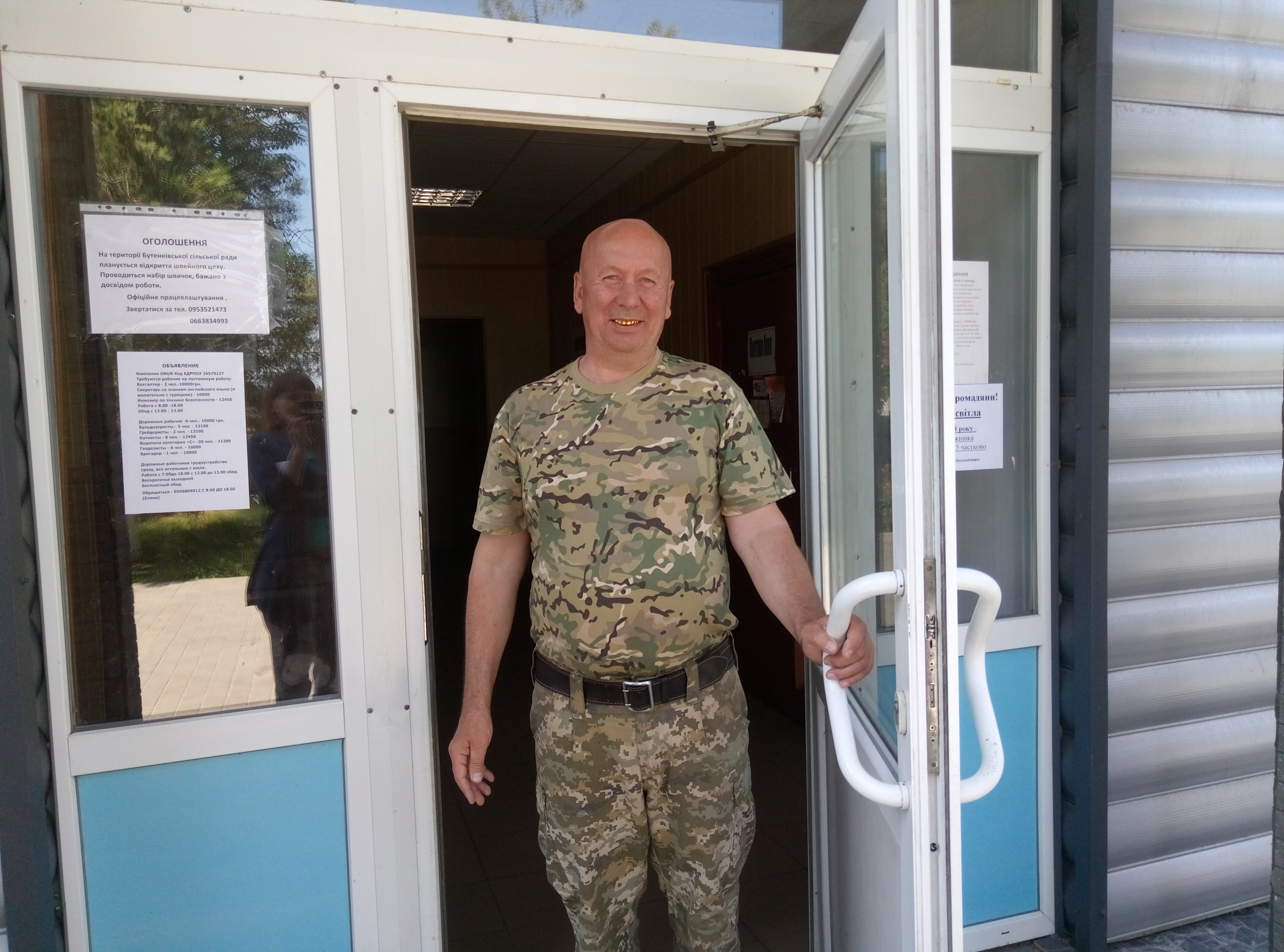 Vasyl Demchenko, assistant to the head of GF, inspector for public order protection
Community police officers
Dnipropetrovsk Oblast, Varvarivska United Territorial Community
In June, one of the country's first community police officers, Roman Petrovych Boyko, began serving in the Varvarivska community of Dnipropetrovsk Oblast.
The “Community Police Officer” project is the next step in the reform of the National Police. Its main goal is to provide each territorial community with a dedicated officer who will live and work there. He receives his salary as a police officer, while the community provides his working conditions (premises, equipment, a vehicle). Therefore he reports not only to his superiors but also to the local residents.
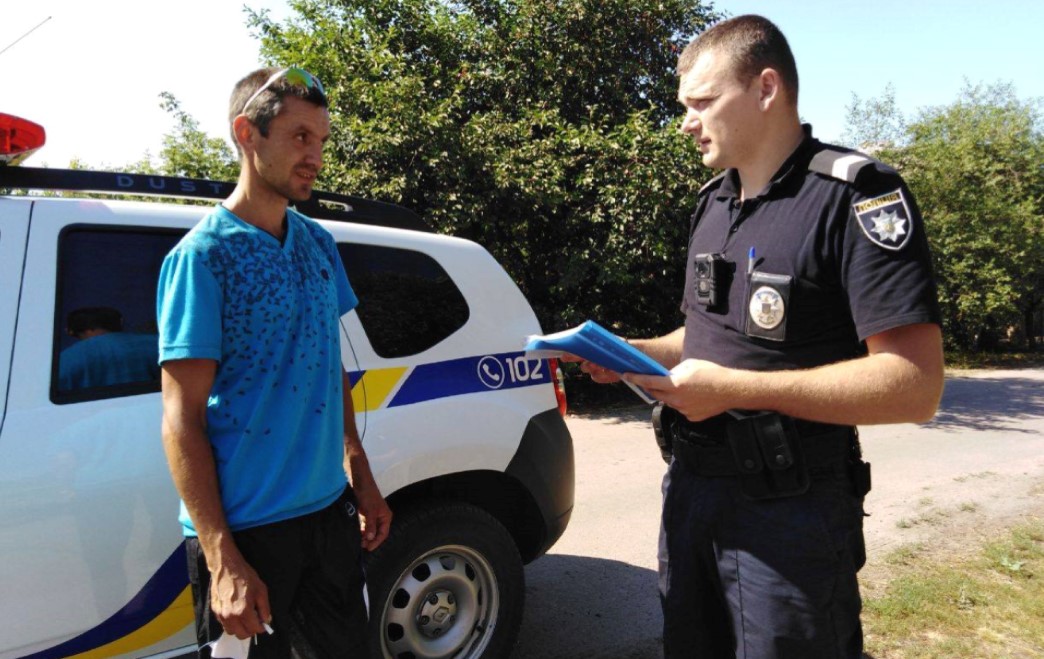 Roman Boyko — Community Police Officer of the Varvarivska community.
At the end of May 2019, 34 community officers graduated; they now work in 21 hromadas in Dnipropetrovsk Oblast. The next regions to implement the project will be Kharkiv and Chernihiv oblasts.
The “Community Police Officer” project is planned to be implemented in two stages: in the first, scheduled for 2019, work is to be established in 802 united territorial communities, and in the second, in 2020, across the entire country.
Collection "Successful Safety Practices: Ukrainian Scale"
The collection "Successful Safety Practices: Ukrainian Scale" was published at the end of 2018, and today students of the Dnipropetrovsk State University of Internal Affairs use it in their curriculum to improve interaction between the National Police and the public.
The collection provides detailed accounts of successful models for creating a safe environment in rural communities, researched by the authors in Kherson, Poltava and Kharkiv oblasts during 2018.
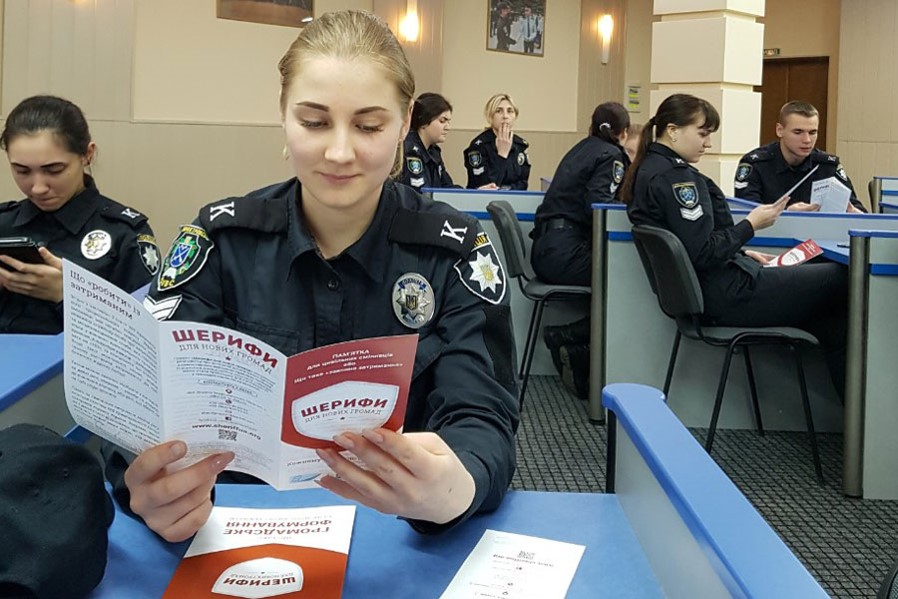 Presentation of the collection "Successful Safety Practices: Ukrainian Scale" at the Dnipropetrovsk State University of Internal Affairs.
Each model description for organizing security in small communities includes sample documents and expert commentary on the main tasks, legal status, social support, powers and responsibilities of sheriffs. Lawyers’ advice is also provided on what to consider when implementing each model. The collection also contains an analysis of the shortcomings and advantages of existing organizational forms of security.
One chapter is devoted to the experience of involving citizens in law enforcement in the USA and Canada, where you can learn why sheriffs are considered officers of the peace, read about the "eyes and ears" of law enforcement, armchair sleuths, and the role and place of sheriffs within law enforcement structures.
All information about sheriffs, sample documents, success stories and video reports are collected on the information platform "Sheriffs for New Communities". sheriffua.org and on the project's Facebook page.
P.S. “Sheriffs for New Communities” is a joint project of the Charitable Organization "Mercy and Health Fund" and the NGO Information Resource Center "Pravovyi Prostir". The project is implemented in the Kherson, Poltava and Kharkiv regions with support from the Charles Stewart Mott Foundation.
