


In 2020 Ukraine faced the COVID-19 pandemic. In a crisis situation, amid decentralization and the absence of state policies for pandemic response, territorial communities had to respond independently to security challenges and ensure the population’s access to public health and social protection services. As a result, communities developed local protocols to ensure safety during the pandemic. The most vulnerable to the pandemic’s consequences were those groups who faced difficulties obtaining basic administrative services and health care. Patient, civic and charitable organizations working with these groups across Ukraine did their utmost to improve their situation and provide essential medical and social services, while local self-government bodies, executive authorities and other stakeholders did not always manage to respond to the specific needs of certain population categories. In more than a year of the pandemic, communities accumulated valuable experience that can help develop the capacity of territorial communities to implement systemic changes in security and strengthen their ability to respond to COVID-19-related challenges and the particular threats and needs of vulnerable groups. With this purpose, we publish cases from four communities compiled as part of a study conducted by the NGO “Institute of Peace and Understanding” with support from the International Renaissance Foundation. The first case is about the Lysetska community of Ivano-Frankivsk Oblast.
The Lysetska settlement territorial community is located in Tysmenytsia Raion of Ivano-Frankivsk Oblast and consists of the urban-type settlement Lysets and the villages Stary Lysets, Stebnyk and Posich. The community covers 83.7 km² and has a population of 8,200. It was newly established in October 2020 and has only been operating with its new budget and powers for a few months. The community’s socio-economic development plan is nearing completion. Other local targeted development programs are at the planning and development stage. A development strategy for the community, including on security issues, has not yet been developed.

From the beginning of 2020, Ivano-Frankivsk Oblast faced the pandemic up close and repeatedly entered the red quarantine zone due to a high number of COVID-19 cases. The Lysets territorial community began providing aid to coronavirus patients as early as the first wave — in March–April 2020. The greatest burden fell on healthcare workers. The former central district hospital (CDH) in the village of Lysets was included among the medical facilities designated for hospitalizing COVID-19 patients. Consequently, in addition to residents of the community, local medical staff treated people from across Tysmenytsia district and the city of Ivano-Frankivsk who were brought there because other hospitals were overfilled. At the start of the pandemic, the lack of a unified treatment protocol for coronavirus patients became an acute problem, which, according to chief physician Taras Yaroslavovych Skoropad, complicated doctors’ work. There was also a shortage of personal protective equipment for medical personnel, to which the community responded quickly. A fundraising campaign was launched to buy disposable and reusable protective suits, masks, caps, shoe covers and antiseptics. “At the initial stage, when pharmacies were short, seamstresses joined in, sewing disposable coveralls and masks from spunbond. Entrepreneurs helped very actively: they also purchased protective suits, face shields, respirators, pulse oximeters and other necessary items. Charitable organizations ran campaigns that also provided PPE. A volunteer movement organized itself, but we did not register it officially — people just helped however they could,” recalls Nadiya Lushchak, a deputy of the Lysets settlement council and member of the NGO “Idea of Development.”
Moreover, she said the problem arose from inadequate information about COVID-19. The media presented very varied, often contradictory information, which harmed people’s psychological state—both ordinary residents and medical workers. For example, community members were afraid to interact with staff of the outpatient clinic and hospital and with their relatives for fear of infection. Medical staff themselves also feared the unknown virus. Lack of information and limited access to information, especially among older people, caused the opposite reaction in some: some did not believe the pandemic was real. As a result, quarantine rules were not always observed in public places—social distancing was ignored, people were unwilling to wear masks, etc. However, oral explanatory conversations were held with entrepreneurs in the community, including grocery store owners; they provided their cashiers with protective screens and placed hand sanitizers in stores, thus carrying out educational work.
To enable a rapid response to the pandemic, residents of the Lysetska community created mobile teams to collect COVID-19 tests from the population. These teams, following the family doctor’s list, visited each person suspected of having coronavirus and collected samples outdoors without entering the home. All team members were fully supplied with personal protective equipment. The problem, however, was that because of the large number of patients, results had to be awaited for a long time—3 to 5 days. It soon became clear that private laboratories in the district needed to be involved. This helped to resolve the situation, and now PCR test results can be obtained by the end of the same day. Those who tested positive and had a complicated course of illness could call a special ambulance team to their home or come to the outpatient clinic themselves, where a separate reception area had been designated for them to avoid contact with other visitors.
In the early stages of treatment, hospitalized COVID-19 patients urgently needed oxygen, which was in critically short supply. And even if it had been possible to find enough oxygen concentrators, using them increased the risk of overloading the hospital’s electrical system, which was not adapted to such demand. Therefore it was decided to provide piped oxygen to all wards. “Because of the large number of patients, sometimes we had to change 80 oxygen cylinders a day. This was a heavy physical burden, and volunteers from the local community helped us a great deal. Now we have managed to install a network in the hospital and rent the necessary equipment — cryogenic tanks and cryocylinders — so that we can supply liquid oxygen,” says the chief physician of the CRN.
Because the community was in the red quarantine zone, transport restrictions caused problems transporting medical staff from their homes to medical facilities. This was addressed in various ways: at the hromada level, by the health department, and with volunteer assistance. But the transport problem also affected other residents. The most vulnerable were patients with chronic illnesses, people with disabilities and lonely elderly people. They were advised to follow quarantine rules and self-isolate strictly. At the same time, these restrictions made it difficult to meet basic needs. For example, being unable to visit the Administrative Services Center (CNAP) in person risked losing subsidies and social assistance. Recommendations to avoid crowded places, such as shops, pharmacies and markets, made buying food and medicine harder. “Our priority was to give residents, especially vulnerable groups, access to all state social assistance. A local Administrative Services Center was created where people can apply for all state social aid — payments to low-income families, disability payments, support for large families, as well as subsidies and benefits — that is, the services vulnerable groups needed,” recalls Iryna Hutych, head of the Administrative Services Center of the Lysets settlement council.
According to the community head Anatoliy Romanovych Lushchak, they also have a local COVID-19 response program that provides one-time financial assistance of 1,000 UAH to all residents who have had coronavirus — they only need to come to the Administrative Services Center (CNAP), fill out an application and provide a medical certificate of illness. In addition, medical programs reimburse treatment for patients with chronic illnesses, mainly those dependent on insulin and those who require dialysis.
The Lysets community also operates a social service that helps vulnerable groups. Social workers provide home services to lonely elderly people, such as delivering groceries and medicines and helping with washing dishes and preparing food. During quarantine all social workers were supplied with personal protective equipment, but the scope of their services was limited: while the region was in the red zone they were not allowed to enter homes and only made deliveries and assisted with tasks outdoors. “We tried to help not only those on the register but also those who suddenly had urgent needs,” says Iryna Hutych. “There was a case when children were staying with their grandmother because their parents were in the process of being deprived of parental rights. That woman contracted coronavirus. We visited them and provided food assistance. The children are still with their grandmother; there is already a decision to terminate parental rights and the process of placing them under guardianship is underway.”
The community also includes a vulnerable group of people with disabilities. They usually have caregivers who assist with daily needs. The church community also contributes: its members care for socially unprotected people, providing basic items such as clothing, hygiene products and help with paperwork. “Before the pandemic our priest ran activities for children and adults with disabilities — workshops, trips and excursions. These stopped due to quarantine, which had a negative psychological impact because they were used to those gatherings and missed the interaction. We hope the situation improves and we can resume these meetings,” says the head of the CNAP. The Lysets community has also established cooperation with the Charitable Foundation “Christian Mission,” which provides material aid to all vulnerable categories, and the NGO “Idea of Development” steps in in difficult circumstances and supplies food packages to the socially unprotected.
Another group affected by the pandemic is large families and families facing difficult life circumstances. All children were learning remotely, but not all had access to the internet, laptops or phones. For example, some large families have only one laptop, so not all children could attend online lessons. This is a complex issue and no solutions have been found yet.
As of June 2021 the situation in the community overall is favorable. The hospital has sufficient personal protective equipment, oxygen and all medicines provided for in the COVID-19 treatment protocol. The number of cases in Ivano-Frankivsk Oblast has fallen significantly, and the region was removed from the red zone, so transport and other restrictions were lifted. The community has organized a mobile team to carry out coronavirus vaccinations, but unfortunately people still often distrust the vaccine and refuse vaccination. The chief physician of the central district hospital believes more thorough explanatory work is needed about the benefits of the vaccine for both the public and medical staff. He has been vaccinated himself to set an example for his colleagues.
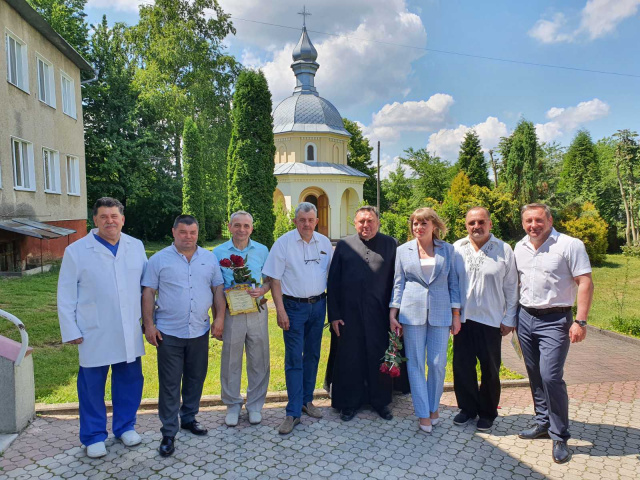
According to the head of the community, the primary challenge remains the situation of vulnerable groups who are still in difficult circumstances. “These are people who require special attention. It is important not to forget them today,” he stresses. That is why in April this year the Lysets community became one of the project participants in “Strengthening the capacity of communities to implement systemic changes in safety related to specific threats and needs in the context of the COVID-19 pandemic,” implemented by the NGO Institute of Peace and Understanding with support from the International Renaissance Foundation.

The goal of the project to be implemented in the Lysets community is to improve access for older people and people with disabilities to basic municipal services and health care as part of efforts to mitigate the effects of the COVID-19 pandemic in Ivano-Frankivsk Oblast. It is being implemented by MAOMS “Agency for OTG Development of Prykarpattia” with support from the NGO Institute of Peace and Understanding, in cooperation with the Lysets settlement council, the Center for Administrative Services and the civic initiative “Intercultural Laboratory”. The Lysets community project will serve as a pilot for replication in other territorial communities of Ivano-Frankivsk Oblast.
