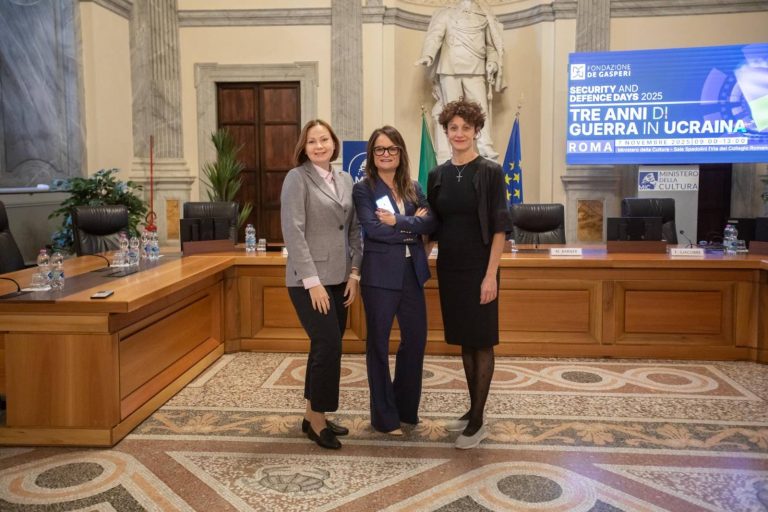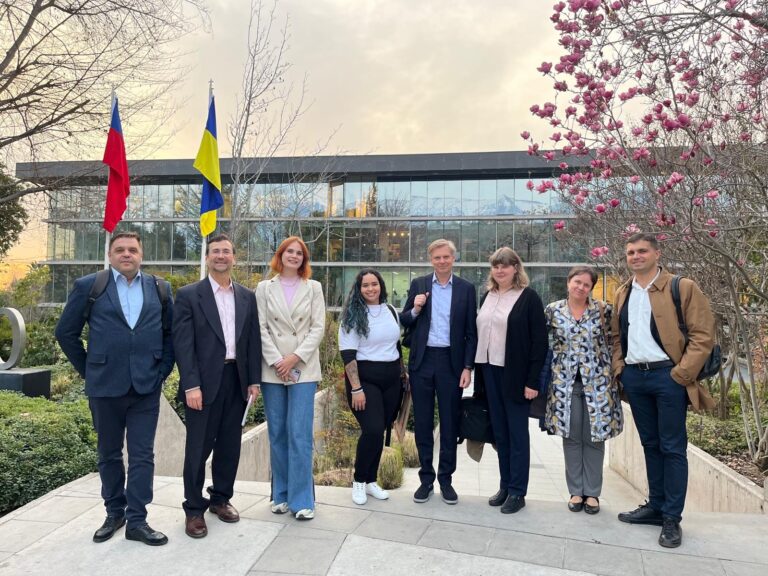


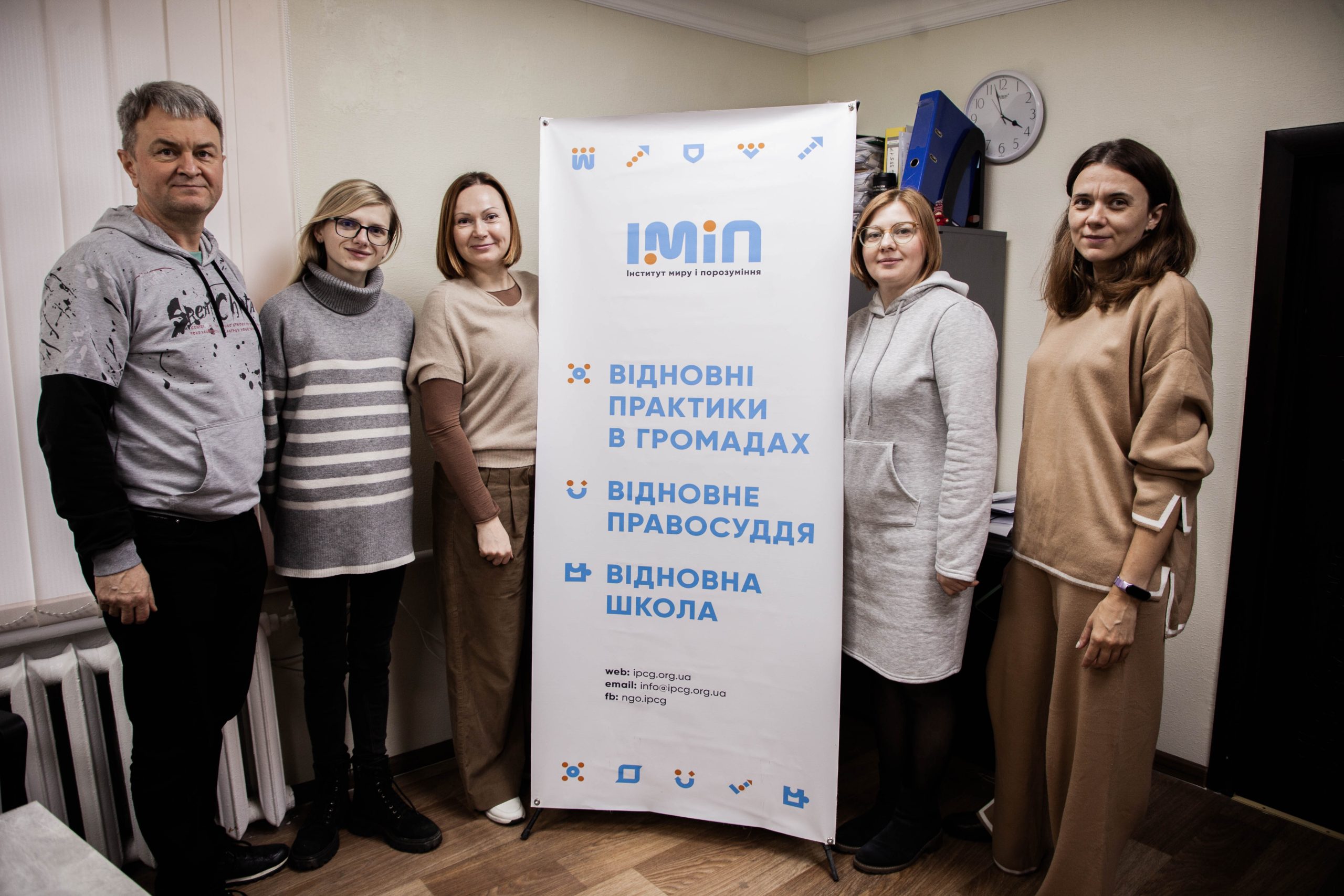
On December 2, a workshop for facilitators was held at the office of the Institute for Peace and сommon ground as part of the project “Dignity and Memory: Recognition of Civilian Victims of War.”
The event focused on strengthening competencies in facilitation and dialogue-based approaches that will support communities in working with issues of memory and recognition of the experiences of civilian victims of war.
Workshop Objective
The main objective of the workshop was to strengthen facilitators’ expertise in applying facilitation and dialogue approaches to support communities in implementing inclusive memorialization policies.
These policies aim to recognize the experiences of civilian victims of war and contribute to the restoration of justice through their internal — personal and collective — acknowledgment.

Why This Matters
Memorialization is not only about memorials or commemorative events.
It is about people — their experiences, needs, pain, and stories that society is not always ready or able to acknowledge.
For communities, this process is often emotionally demanding and complex. That is why facilitators need skills that help to:
- create safe spaces for discussing difficult experiences;
- address the impact of war without causing retraumatization;
- work respectfully with diverse groups;
- facilitate dialogue that fosters understanding rather than deepens divisions.
This is why, before starting work directly with communities, facilitators came together to align approaches and strengthen a shared understanding of key principles.

Workshop Program
1. Memorialization: Meaning and Approaches
Participants explored the concept of memorialization, its core principles, and key directions. Discussions focused on:
- the meaning of memorialization in the context of civilian victims of war;
- how to develop sensitive and respectful approaches;
- methodological insights developed within the project.
2. Group-Based Practical Work
Teams worked on analyzing real risks and situations communities may face. The focus included:
- key aspects to consider when working with people;
- identifying sensitivities and vulnerabilities;
- facilitation tools that can support the process.
3. Working with Tools and Group Cases
In the second half of the day, participants continued practical work by analyzing different groups, interaction formats, and preparing consolidated insights for future dialogue processes.
4. Developing a Dialogue Framework
The final session focused on how to initiate and conduct dialogue processes in communities, including:
- the purpose of launching a dialogue process;
- ethical considerations and sensitive aspects;
- ensuring inclusivity, safety, and respect for memory;
- defining next steps for facilitators’ work.
What’s Next?
The next phase is practical implementation.
Very soon, facilitator teams will begin working directly with communities, conducting dialogues, discussions, and joint reflections, and developing inclusive approaches to memorialization.
The goal is to create spaces where the experiences of civilian victims of war are recognized, heard, and respectfully represented, and where memorialization becomes a pathway to understanding and the restoration of justice.


| This publication was compiled with the support of the International Renaissance Foundation. It’s content is the exclusive responsibility of the authors and does not necessarily reflect the views of the International Renaissance Foundation. |